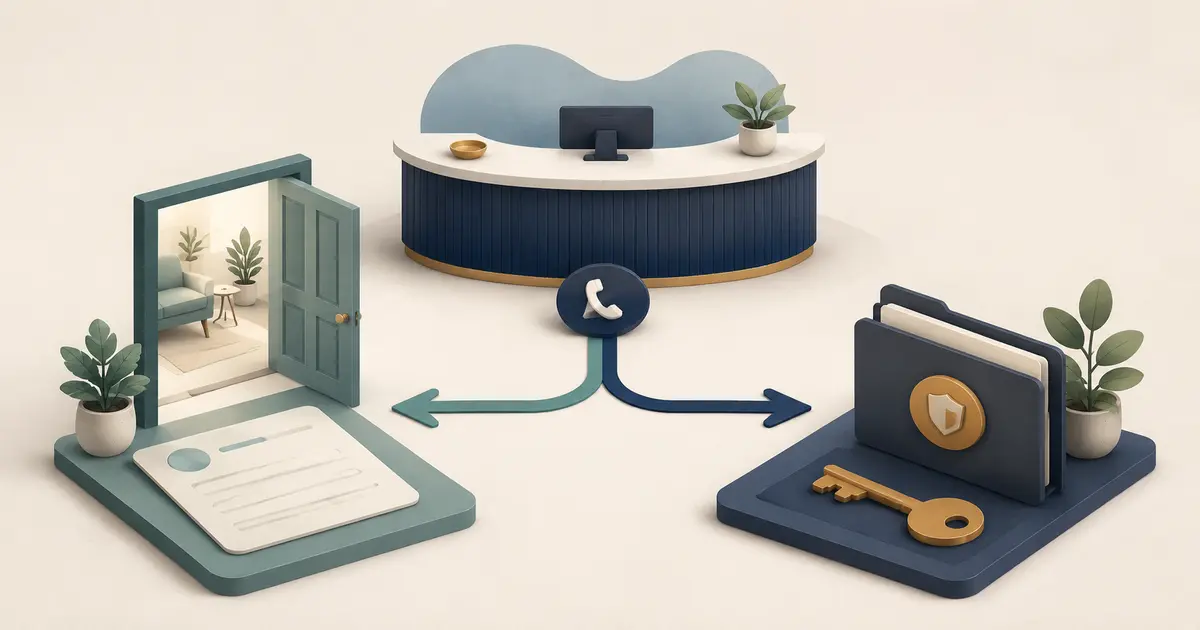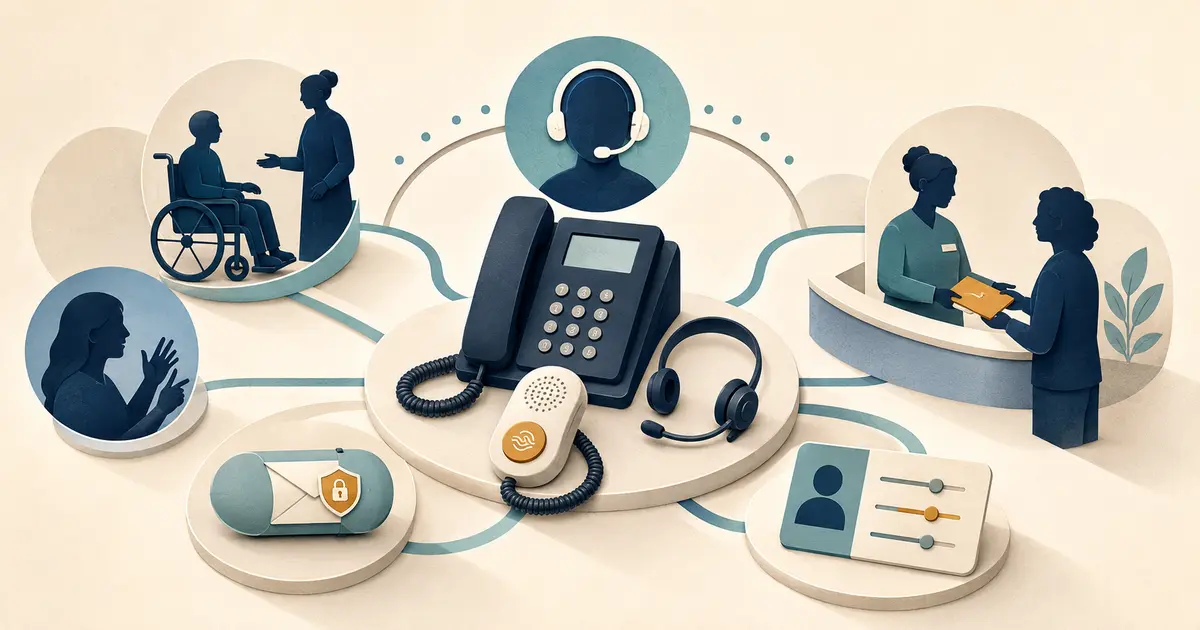
Accessible dental phone communication gives callers a workable way to receive information and express their needs. Build the plan around the communication's complexity, the person's usual method, qualified support, privacy, and an alternate path when the first channel fails.
This is operational guidance, not a legal conclusion. Qualified advisers should determine the practice's obligations under disability, language-access, privacy, and state laws.
Ask what communication method works
Do not assume that every deaf or hard-of-hearing caller uses the same service, that every person with limited English proficiency wants a family interpreter, or that text is automatically accessible.
Train staff to ask a neutral question:
“What communication method works best for this conversation?”
Record the preference in the approved location and distinguish a standing preference from a one-time request.
Accept relay calls
ADA.gov states that covered entities must accept telephone relay service and video relay service calls and treat them like other calls. Staff should know that a communications assistant may introduce the call, that turn-taking can take longer, and that the assistant is facilitating—not replacing—the caller.
Do not hang up because the interaction sounds unfamiliar. Do not demand a different channel solely for staff convenience.
Test relay calls before an urgent situation exposes an untrained response.
Match support to the conversation
ADA.gov advises considering the nature, length, complexity, context, and person's usual communication method. A short office-hours question may need a different aid from a detailed clinical or financial discussion.
Build paths for:
- simple public information;
- appointment request;
- scheduling change;
- benefits or billing discussion;
- form completion;
- clinical conversation;
- urgent-message escalation;
- complaint or grievance.
Front desk staff should know when to arrange qualified support or transfer to an authorized staff or clinician workflow.
Create a language-access path
HHS explains that certain recipients of federal financial assistance must take reasonable steps to provide meaningful access for people with limited English proficiency. Determine the practice's actual duties with advisers.
For each commonly requested language, document:
- how staff identify the language;
- approved interpreter source;
- connection steps;
- backup when unavailable;
- translated vital documents;
- confidentiality and business associate review;
- how uncertainty is recorded;
- owner and review schedule.
Avoid relying on minors or untrained family members as the default. The Office of Minority Health's CLAS standards emphasize competent language assistance and discourage untrained interpreters.
The bilingual answering-service checklist provides vendor-specific questions.
Offer alternate channels carefully
Text, secure portal, email, video, and in-person communication may improve access for some people and create barriers for others. Verify that the alternative actually works with screen readers, captions, interpreters, keyboard navigation, attachments, and the patient's technology.
Do not move sensitive information into ordinary text merely because voice is difficult. Use the secure messaging rules for protected details.
Protect privacy with interpreters and companions
Determine whether an interpreter is workforce, contractor, or a person chosen by the patient and apply the appropriate HIPAA and contract rules. HHS explains circumstances in which providers may share information through interpreters and notes that contracted arrangements may require business associate agreements.
Do not disclose protected information before completing the practice's approved identity and permission process. Do not assume a companion may receive details because they are helping with the call.
Train the full call path
Practice with fictional scenarios:
- telecommunications relay call;
- video relay call;
- caller who uses captions;
- caller with speech disability;
- Spanish interpreter request;
- uncommon language with delayed interpreter access;
- guardian or companion on the line;
- new-patient request;
- detailed protected discussion needing a secure channel;
- urgent-sounding call requiring clinician-approved escalation;
- vendor outage;
- accessibility complaint.
Score respect, connection success, wait explanation, privacy, request accuracy, escalation, and closure.
Make accessibility visible internally
The call record should show the requested method, support used, unresolved barriers, promised follow-up, owner, and outcome. Do not put stigmatizing labels or unnecessary disability details in general notes.
Monitor failed relay connections, interpreter delays, abandoned calls, staff transfers, missing preferences, inaccessible documents, complaints, and requests still open. Review small-group reports carefully to avoid identification.
The patient phone experience plan can incorporate these measures into the broader service review.
Keep automation bounded
An automated agent may not reliably detect every communication need. Provide a clear path to staff and do not trap callers in repeated voice prompts. Missed Calls Dental captures requests from eligible forwarded missed calls in English; it does not provide interpreter services, clinical decisions, or guaranteed accessibility for every caller.
Managers should publish alternate contact options and test them with the people and technologies they are meant to support.
Review after every change
Retest after new phone systems, vendors, office locations, forms, portals, hours, staff roles, or interpreter contracts. Accessibility is a property of the whole interaction, not a one-time policy document.
A strong plan lets the caller choose a workable path and gives staff the tools to complete it without improvising, oversharing, or handing the person from queue to queue.
Maintain an accessibility service directory
Keep current contact and setup instructions for relay services, qualified interpreters, captioned or text alternatives, accessible document support, and vendor assistance. Record operating hours, expected setup, privacy review, account owner, backup, and last successful test. Staff should not have to search the public web while a caller waits.
Use a warm ownership rule. The employee who receives an accessibility request remains responsible until another named person accepts it. A transfer, ticket, or interpreter request is not complete by itself. Tell the caller what is happening and offer an alternate method if the expected connection fails.
Review public contact information in accessible formats. Ensure the website and voicemail explain how to request communication support without requiring a phone-only loop. Test links, forms, keyboard access, screen-reader labels, captioning, and text alternatives with people who use the relevant tools when possible.
Create a complaint and recovery path. Record the barrier, affected communication, immediate workaround, owner, corrective action, and final verification. Do not place unnecessary disability or clinical information in a broad quality log. Qualified advisers should review legal complaints and accommodation decisions.
At least twice a year, run a cross-channel drill: a relay caller requests an interpreter, a secure document is needed, and the primary vendor is unavailable. Observe whether staff preserve identity, privacy, context, and ownership through each transition.
Accessibility quality should appear in routine operations reporting rather than a separate forgotten binder. Review connection failures, abandoned requests, wait explanations, staff training, and repeated workarounds alongside other patient communication measures. The plan is working when supported paths are ordinary enough that staff use them confidently.
Give every employee a concise escalation card with relay acceptance, interpreter request, alternate-channel choice, privacy check, urgent-message path, vendor support, and complaint owner. The card should tell staff how to keep ownership while help connects.
Review the card with new employees and during role changes. Use a fictional call to verify they can locate the approved service, explain the wait, avoid unnecessary disclosure, and document the preference. Correct the workflow when the test requires an unofficial workaround.
Before a new vendor or phone menu launches, include accessibility in acceptance testing and obtain sign-off from the operational and compliance owners. A later accommodation request should not be the first time the practice learns that a transfer, form, or secure message cannot be used.